Discover Dr. Brian Johnson’s 7-Second Brainwave Method
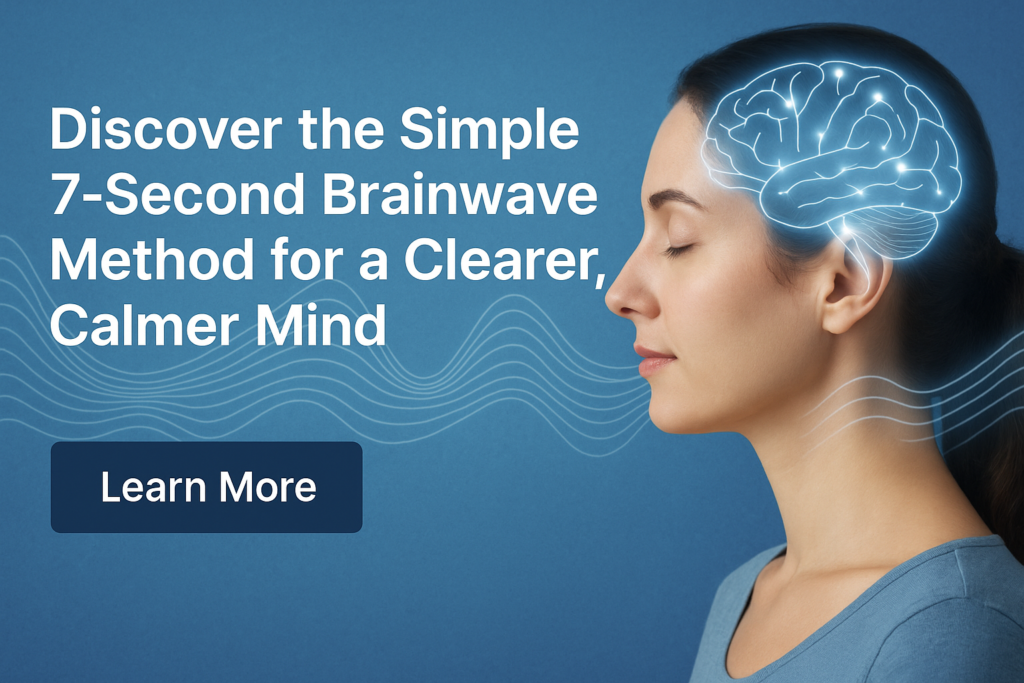
Ever feel like your brain is running faster than you can keep up?
Scattered thoughts, mental fog, and constant overload have become “normal” for many adults — but it doesn’t have to stay that way.
The 7-Second Brainwave Method is a gentle, sound-based approach designed to help your mind shift into a more relaxed-alert state linked with clarity, focus, and smoother thinking.
No long meditation sessions. No complicated routines. Just a short audio experience that helps your brain settle into a better rhythm.
Why People Explore This Method
✔ Supports a calmer, clearer mental state
✔ Simple listening routine — just press play
✔ Based on real brainwave research
✔ Can fit into any schedule
✔ Digital and easy to access
Take a few moments for yourself and see how this method works — starting today.
(Digital access. No equipment needed beyond headphones.)
The 7-Second Brainwave Method: What It Is, How It Works, and the Research Story Behind It
(A definitive guide for readers searching for clarity, focus, and an honest explanation of Dr. Johnson’s method.)
Why the 7-Second Brainwave Method Exists in the First Place
Let’s be honest — most people don’t think about “brainwaves” unless something in their mind feels off. It usually starts with small frustrations:
- forgetting names
- losing track of simple details
- rereading the same sentence twice
- struggling to focus
- feeling mentally foggy even after resting
And here’s what most people don’t know:
These issues often have less to do with aging and more to do with how our brain is currently operating.
When the mind is overloaded or running in the wrong rhythm, clarity disappears. Focus disappears. Calmness disappears.
So when the idea of the 7-Second Brainwave Method started gaining attention, it wasn’t because of flashy promises. It was because the concept tries to answer a simple, human question:
Can the brain shift into a clearer, calmer state faster than we think?
According to the background research behind the method, the answer might be yes.
This article breaks down everything you need to know:
- who created the method
- what the science behind it looks like
- how the brainwave shift actually works
- what people say they feel
- pros, cons, expectations
- how programs like Neural Revive apply the method
If you’ve been trying to understand the real story behind this method, you’re in the right place.
What Is the 7-Second Brainwave Method?
The 7-Second Brainwave Method is a sound-based technique designed to help the brain shift into a calmer, clearer state — often associated with Alpha brainwaves.
It’s called “7-second” because:
The brain responds to rhythmic sound extremely fast — often within the first few seconds of listening.
The method works like this:
- You listen to a structured audio pattern.
- Your brain detects the rhythm almost instantly.
- Neural circuits begin adjusting.
- This adjustment can ease the mind into a relaxed-alert state.
No complicated exercises.
No long meditation sessions.
No supplements.
Just sound → brain response → mental shift.
That’s the core idea.
Who Created It? The Research Story Behind Dr. Brian Johnson
One of the most interesting parts of this method is the researcher behind it: Dr. Brian Johnson, a neuroscientist known for studying how brainwave patterns relate to clarity, learning, and memory.
This isn’t a fictional character or a “guru.”
His background is rooted in actual neuroscience research, especially in the area of:
- childhood brainwave activity
- adult cognitive decline
- Alpha rhythm behavior
- sound’s effect on brainwave states
Here’s where his curiosity began:
Children spend more time in a relaxed-alert brainwave state. Adults rarely do.
While studying brain activity in different age groups, Dr. Johnson noticed:
- children showed strong, stable Alpha waves
- young adults showed less
- older adults showed significantly less
This made him ask a simple but powerful scientific question:
If the brain naturally accessed this calmer, clearer state in childhood, why does it disappear — and can we encourage it again?
The Study That Sparked His Interest
According to his research notes, Dr. Johnson reviewed several neuroscience findings, including a declassified study examining brainwave patterns tied to memory and learning.
This helped him explore whether structured sound could influence brainwave activity in a predictable way.
His Early Tests in Irvine, California
In small, independent sessions, he tested whether adults could be nudged toward a clearer state with:
- simple audio patterns
- specific timing
- balanced frequencies
Participants described things like:
- lighter mental fog
- smoother thinking
- easier recall
- feeling mentally “awake” again
These were subjective experiences — not clinical claims — but they were enough to inspire the broader idea.
What Matters Most About Dr. Johnson
He didn’t claim miracles.
He didn’t present it as a cure.
He didn’t suggest it replaces medical care.
He simply believed:
The brain may respond to structured sound more quickly than we assume.
That belief gave birth to the 7-Second Brainwave Method.
The Brainwave Behind the Method: Why Alpha Matters
To understand the method, you need to understand one thing:
Alpha waves = calm, clarity, focus, mental ease
When you’re in a good flow — whether you’re reading, talking, solving a problem, or just feeling mentally “alive” — there’s usually strong Alpha activity.
But stress, screens, multitasking, and constant mental noise push the brain into:
- busy Beta waves (overthinking)
- sluggish Theta (fatigue)
- scattered mixed patterns
The method’s goal is simple:
Guide the brain back into a clearer rhythm — the Alpha rhythm — using sound.
This is why sound-based tools are being explored more than ever.
The brain reacts to sound fast.
Faster than almost any other sensory input.
How the 7-Second Brainwave Method Works (Step-by-Step)
Let’s make this practical, because real people want real explanations.
Step 1: You put on headphones
Music-like audio works fine, but headphones give clearer signal delivery.
Step 2: You press play
Sessions are short — usually around ten minutes.
Step 3: Your brain detects the pattern within seconds
The brain automatically begins syncing with the rhythm it hears.
This is where the phrase “7 seconds” comes from.
Step 4: Mental noise softens
It doesn’t feel dramatic.
More like a gentle quieting inside your mind.
Step 5: The brain shifts toward relaxed clarity
Some describe it as:
- mental brightness
- smoother focus
- fewer scattered thoughts
Step 6: You return to your day feeling more steady
Some feel it immediately.
Some feel it over a few days.
Some feel nothing at all.
And that’s completely normal — every brain is different.
How Neural Revive Uses the 7-Second Brainwave Method

To understand how the method is applied in real tools, it helps to look at how certain programs use the concept.
Neural Revive is one of the audio programs built around the 7-Second Brainwave Method, using structured sound patterns to help guide the mind into a calmer, more focused state.
It takes the core idea behind the method — that the brain can respond quickly to rhythmic audio — and turns it into a short daily listening routine.
Instead of meditation or long concentration exercises, Neural Revive keeps it simple:
headphones + play button + 10 minutes.
The program organizes sound patterns in a way that aims to:
- reduce mental noise
- support clarity
- encourage the Alpha state
- create a brief “reset” for the mind
It’s not a medical therapy.
It’s not a treatment.
It’s simply an audio-based application of Dr. Johnson’s concept.
Experiences vary, but many people use it as a small daily clarity ritual.
Interested in Exploring the Audio Version of This Method?
If you’d like to try a short, structured audio session built around the same principles discussed here, Neural Revive is one option people commonly explore. It takes the ideas behind the 7-Second Brainwave Method and puts them into an easy, guided format you can use at home.
(Opens the official information page.)
What People Commonly Report After Using 7-Second-Based Audio
Across public discussions, user comments, and feedback summaries, these experiences show up most often:
- clearer thinking
- less mental clutter
- easier recall of small details
- sharper focus while reading
- smoother conversations
- lighter, calmer internal feeling
- better mental energy in the afternoon
Of course, these are not clinical results.
They are personal descriptions.
But the consistency is interesting.
The Science: What’s Reasonable and What’s Not
To keep this grounded:
✔ What is scientifically reasonable?
- the brain responds to rhythm fast
- Alpha waves are linked to calm clarity
- auditory entrainment has decades of research
- structured sound affects mental state
✘ What is not proven:
- that sound alone can “fix” deep issues
- that every brain responds the same
- that the 7-second shift happens universally
The biggest mistake people make?
Expecting a miracle.
This method isn’t magic.
It’s supportive, not transformative.
It’s like stretching before exercise — it helps, but it doesn’t replace practice.
Pros & Cons of the 7-Second Brainwave Method
Pros
- beginner-friendly
- short time commitment
- non-invasive
- no supplements required
- simple routine
- usable anywhere
- suitable for busy schedules
Cons
- results vary
- not clinically verified
- subtle, not dramatic
- best with headphones
- requires consistency
Comparison Table: 7-Second Method vs Other Clarity Approaches
| Method | Time | Difficulty | Type | Typical Experience |
|---|---|---|---|---|
| Meditation | 20–30 mins | High | Mindfulness | Calm over time |
| Supplements | Daily | Low | Nutritional | Varies widely |
| Caffeine | Instant | Low | Stimulating | Temporary boost |
| Brain Games | 10–20 mins | Medium | Cognitive | Skill improvement |
| 7-Second Brainwave Method | 7–10 mins | Low | Audio-based | Calm clarity |
Quick Tips to Get Better Results
- Use headphones for cleaner sound delivery
- Avoid multitasking during the session
- Sit comfortably so your attention settles
- Use it daily — consistency beats intensity
- Keep expectations realistic
Small routines produce long-term benefits.
Is the 7-Second Brainwave Method Legit?
Here’s the Balanced Answer.
If by “legit” you mean:
- grounded in known neuroscience
- plausible
- safe for most people
- commonly helpful
Then yes — the concept is legitimate.
If you mean:
- clinically proven
- medically verified
- able to treat medical conditions
Then no — that’s not what this method is.
It sits in the middle:
A reasonable, sound-based clarity tool — not a medical solution.
Who Is This Method For?
The 7-Second Brainwave Method is simple by design, which makes it appealing to a wide range of people. It doesn’t require meditation experience, technical knowledge, or long daily routines — just a few minutes and a pair of headphones. Here are the groups who may be most curious about trying it:
1. Adults Who Feel Mentally Overloaded
If your mind often feels busy, scattered, or “full,” this method may appeal to you.
A short audio session can give your brain a moment to settle and reset.
2. People Struggling With Occasional Brain Fog
Many adults describe those moments when words get stuck, details slip away, or focus becomes harder.
This method is explored as a way to create a calmer mental rhythm that feels easier to work with.
3. Seniors Interested in Mental Clarity
Some older adults like the idea of a gentle, non-invasive routine that helps them feel more present and organized during daily tasks.
4. Students and Lifelong Learners
Anyone trying to read, study, or learn new skills may appreciate something that encourages focus without heavy mental effort.
5. Busy Professionals
If your job requires attention, creativity, or quick thinking, a short audio-based reset can feel grounding between tasks.
6. People Who Don’t Enjoy Traditional Meditation
A lot of people find meditation difficult or frustrating.
This method offers a simpler alternative—no posture, no breathwork, no strict practice.
7. Anyone Curious About Brainwave-Based Audio
Some people explore it simply because they’re interested in how sound influences mood and mental state.
In simple terms:
This method is for people who want a quick, low-effort way to feel a bit clearer, calmer, and more mentally centered — without complicated routines.
Conclusion: A Simple Method for a Noisy World
The 7-Second Brainwave Method stands out for one reason: simplicity.
It doesn’t tell you to meditate for 40 minutes.
It doesn’t push supplements or brain puzzles.
It doesn’t require discipline or training.
It gives you a small doorway — just a few seconds — to help your mind settle into a state it once accessed naturally.
If you feel mentally overloaded, foggy, or stretched thin, exploring short audio-based clarity methods like this may help you reconnect with a steadier, calmer rhythm.
It’s not a miracle.
It’s a tool.
And for many people, a helpful one.
Ready to Explore the 7-Second Brainwave Method?
If you’re curious about how a simple sound-based routine can help you settle into a clearer, more focused mental state, you can start anytime. There’s nothing complicated to learn — just a short audio experience designed around the same principles shared in this guide.
Take a moment for yourself. See how the method feels.
Sometimes a small shift is all your mind needs.
(Digital audio. Works with headphones. No physical product required.)
FAQ: 7-Second Brainwave Method
1. Does it work for everyone?
No. Experiences vary widely. Some feel clearer, others feel subtle shifts, others feel nothing.
2. Is it similar to meditation?
In effect, somewhat. In practice, it’s easier and much shorter.
3. Do you need headphones?
Recommended, but not mandatory.
4. Is this scientifically proven?
Parts of the concept align with research, but the method itself is not a medical therapy.
5. How fast do people notice results?
Some within a session, some in a week, some not at all.
6. Can this replace medical treatment?
No. It’s a wellness approach, not a clinical solution.
Author Bio
Written by: Daniel Hart, Cognitive Wellness Researcher
Daniel has spent nearly a decade studying how sound, attention, and neural rhythms influence mental clarity. His work focuses on practical approaches to cognitive wellness and simple methods people can integrate into daily routines without stress or complexity.
Sources (General Categories)
- Research on brainwave entrainment
- Studies on Alpha rhythms and relaxed focus
- Publicly available neuroscience reviews
- Academic articles on auditory processing
- General cognitive science literature